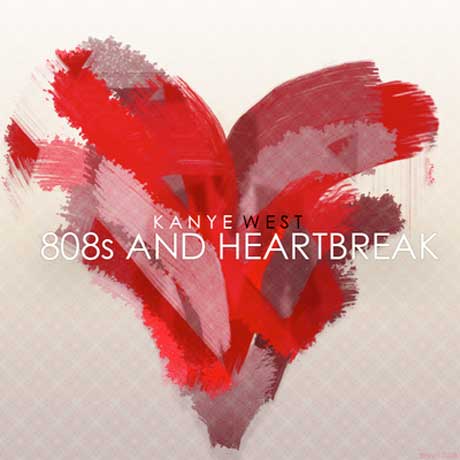
Kanye West: 808s and Heartbreak
By Zan Romanoff /// published in the December 2008 issue
He probably wouldn’t want to offer any excuses, but we should start here anyway: Kanye West is, understandably, a little tired. The man is a rapper, a producer, the author of his own blog, and an undeniably public figure. He’s become something of a style icon: the colorful slat-lensed sunglasses he sported briefly last summer have become known, colloquially, as Kanye glasses, and there is at least as much chatter surrounding recent events in his personal life as concerning the release of his fourth album, 808s and Heartbreak.
If you didn’t already know the story, that title would clue you in: this is a man who is seriously suffering. This, too, is understandable: after unexpectedly losing his mother last year and later breaking off his engagement to designer Alexis Phifer, Kanye is having a tough time. The way that his sadness and exhaustion manifest in 808s, however, engenders boredom rather than empathy; his lethargic drawl, filtered through vocoders and laid over prefab synth riffs and rumbling drum beats, sounds mostly sleepy and disinterested. The title is the formula into which West plugs his personal disappointments: 808s (a reference to a particular kind of drum machine) + all the hurt of a recently broken heart = lovelorn rambling, exactly what we get.
West has never been known as a particularly able lyricist; the triumph of his debut College Dropout and most recent album Graduation owed more to his facility with a hook and a series of knockout singles markedly unlike the rest of their demographic than their demonstration of his verbal wit. 808s and Heartbreak sees Kanye sinking into a slinky morass of R&B, chastising women for being spoiled, for cheating, for thinking he’s cheating. He also speaks about himself on occasion, and these provide perhaps the album’s most affecting moments, as when he raps, on “Welcome to Heartbreak” about how “my friend shows me pictures of his kids / and all I could show him was pictures of my cribs / he said his daughter got a brand new report card / and all I got was a brand new sports car.” It’s difficult to make the trappings of wealth sound like a pathetic consolation prize, but West manages it.
Kanye West has never been a gangster rapper; he’s honest about his roots in middle-class Chicago, and so doesn’t suffer from the all too familiar problem of finding himself, suddenly wealthy and successful, unable to draw on his usual subject matter of guns and drugs. Jesus Walks, his breakthrough single, begins with an homage to the darker side of the flyover state: “you know what the Midwest is? Young and restless.” West goes on to extol religious faith and exhort Jesus to accompany him wherever he goes, even into the club. Heartbreak has often made for great art, so why can’t Kanye translate his into anything more than a mediocre breakup album?
Perhaps it is because he has become too public a figure; though he mines the personal, he rarely goes deep, and so what he offers are platitudes, songs about capital H-heartbreak and the universal experience of girl trouble rather than lyrics drawn from the actual experiences of his life. That kind of vulnerability is difficult on such a well-lit stage, and Kanye cannot really be blamed for holding something back. His wounds are still fresh; he flourishes them for long enough to provoke us and then withdraws to heal in private, allowing the machines to take over for him. Most of the songs go on at least a minute too long, leaving the listener wondering if someone in the studio went out for a smoke break and simply forgot to stop the loop.
There are bright spots: the second single, “Heartless”, is possessed of a sing-song chorus worthy of West’s reputation as a hitmaker. “Amazing” too finds Kanye leaning into his groove, and the addition of Young Jeezy in one of the few actual raps on the album provides a welcome relief from Kanye’s half-sung vocals. Perhaps the album’s greatest trouble is its consistency — aside from these standouts and the weirdly upbeat “Paranoid,” 808s goes down too smoothly, a single gulp of sadness and self-pity washed down with vocoder-warbling and drumbeats like the rumble of tomorrow’s hungover headache. It’s true that Kanye’s suffering; it just doesn’t seem fair to make his listeners suffer along with him.
Comments
Leave a comment“allowing the machines to take over for him” this the end
/// posted by Malachy
K A E R B T R A E H & S 8 0 8
/// posted by nzle